
Vilas County Deed Records and Instrument Types
The Register of Deeds records every deed in Vilas County. LandShark is the portal for searching those deed records. An instrument shows who presented it, the parties, the legal description, and the recording details. A deed alone does not settle every title question. Compare it with earlier transfers before drawing any conclusion. Also check attached exhibits and any later correction or release. That extra step protects you when the chain of ownership matters.
| Deed Type | What It Does | Common Use |
|---|---|---|
| Warranty or quitclaim deed | Transfers the interest stated in the instrument | Sale, family transfer or title cleanup |
| Trustee or executor deed | Shows a transfer made by a fiduciary | Estate or trust administration |
| Transfer-on-death deed | Names a beneficiary under the recorded instrument | Estate planning and later title review |
| Mortgage or release | Records a security interest or its satisfaction | Reviewing encumbrances around a transfer |
| Plat or certified survey | Shows a recorded land division or survey reference | Connecting lot descriptions to a parcel |
A deed moves the interest the grantor conveyed. A mortgage or lien works differently. It records a claim or security interest instead. The Register of Deeds also keeps plats and certified surveys, which explain how a lake lot, government lot or subdivision parcel was originally described.
Vilas County Grantor and Grantee
LandShark's party index tracks names in two roles. The grantor gives up an interest. The grantee takes it. Treat the current tax-roll owner as a starting lead. Then search for that person as grantee to locate the acquisition deed. Read the grantor named in that instrument and work backward through the chain. A tract search helps when you hold the full legal description. Exact search controls and coverage years should be confirmed in the live portal. The office can also verify them.
- Search the known owner or entity in LandShark and note each possible grantee result.
- Match the deed's legal description to the Ascent parcel, not just the party name.
- Record the grantor, grantee, document date and recording reference for that transfer.
- Search the grantor as a grantee to locate the prior acquisition, repeating until the chain stops or the online range ends.
- Grantor
- The person or entity named as transferring an interest.
- Grantee
- The person or entity receiving the interest in the instrument.
- Chain of title
- The ordered sequence of recorded transfers for a parcel.
- Book and page
- A volume reference used in older records; newer index references may use document identifiers.
Vilas County Deed Requests
LandShark returns index results and images, though image access or copies may carry a fee. The Register of Deeds sits at 330 Court Street, Eagle River, WI 54521, phone 715-479-3660, email registerofdeeds@vilascountywi.gov. Ask the office about the current copy type, payment method, and fee before sending a request.
A paper request should include the names, an approximate date, a parcel or legal description, and the LandShark instrument reference if you have it. If the record is not online, ask whether a counter search or an older book lookup is possible. The Register of Deeds office page lists recording services and forms.
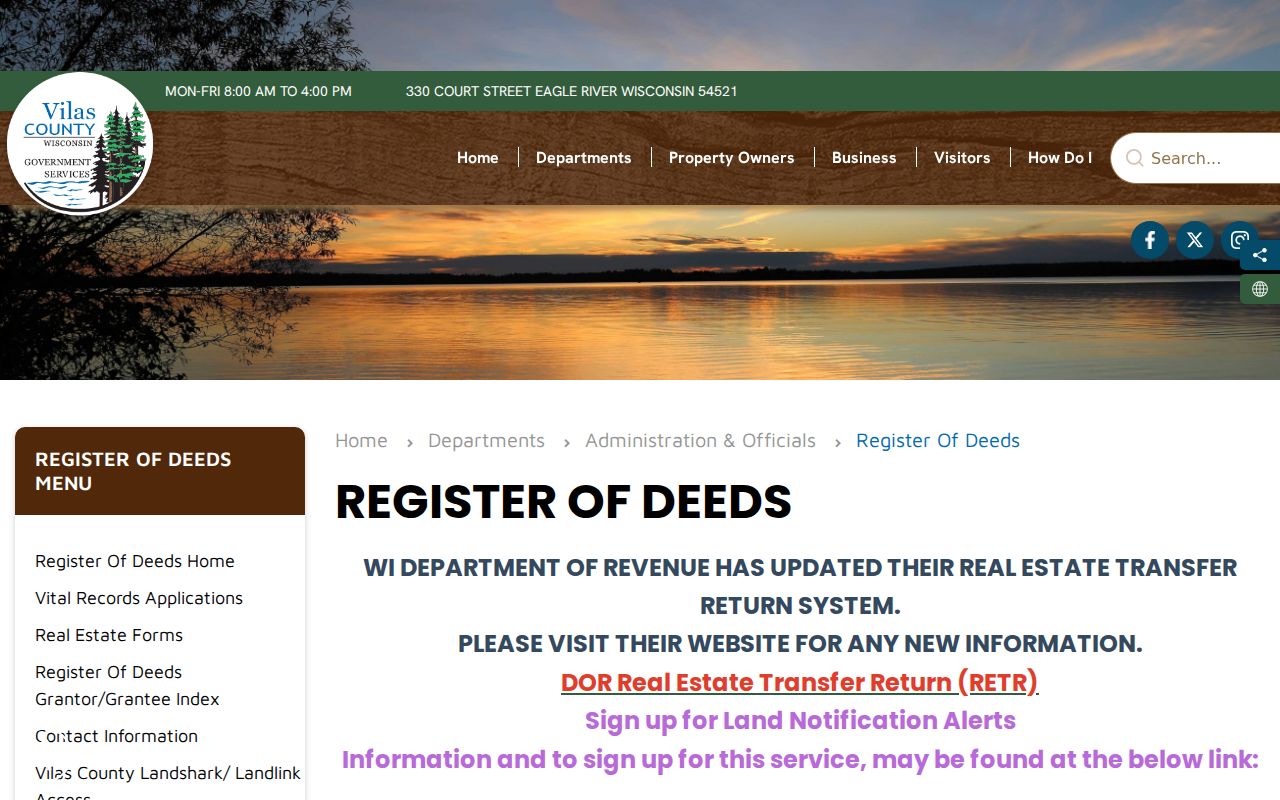
A certified copy and a plain image serve different purposes. Say which one you need before paying or visiting.
Recorded, not guaranteed. The index shows instruments filed in the county record, not every unrecorded claim or legal issue. It is not a title opinion; consult a title professional when clear ownership must be established.
Vilas County Deed Records in LandShark
The portal offers party searches and tract searches. A party search fits when a deed name is known. A tract search fits when the legal description pins down the land. Names may show up with middle initials, former surnames, trusts, estates or LLCs. Try each known form and compare the parcel description on every result. The public landing page states no earliest indexed year. The full dropdown list of coverage is not published either. Confirm dates in the portal or with the office.
| Index route | Starting clue | Check before accepting |
|---|---|---|
| Party | Grantor or grantee name | Role, date and tract description |
| Tract | Legal description or parcel reference | Lot, section, town-range and exceptions |
| Image | Index result or document reference | Legibility and all attached pages |
Begin at the Vilas County LandShark index. When a name search returns multiple properties, the legal description is the safer filter.
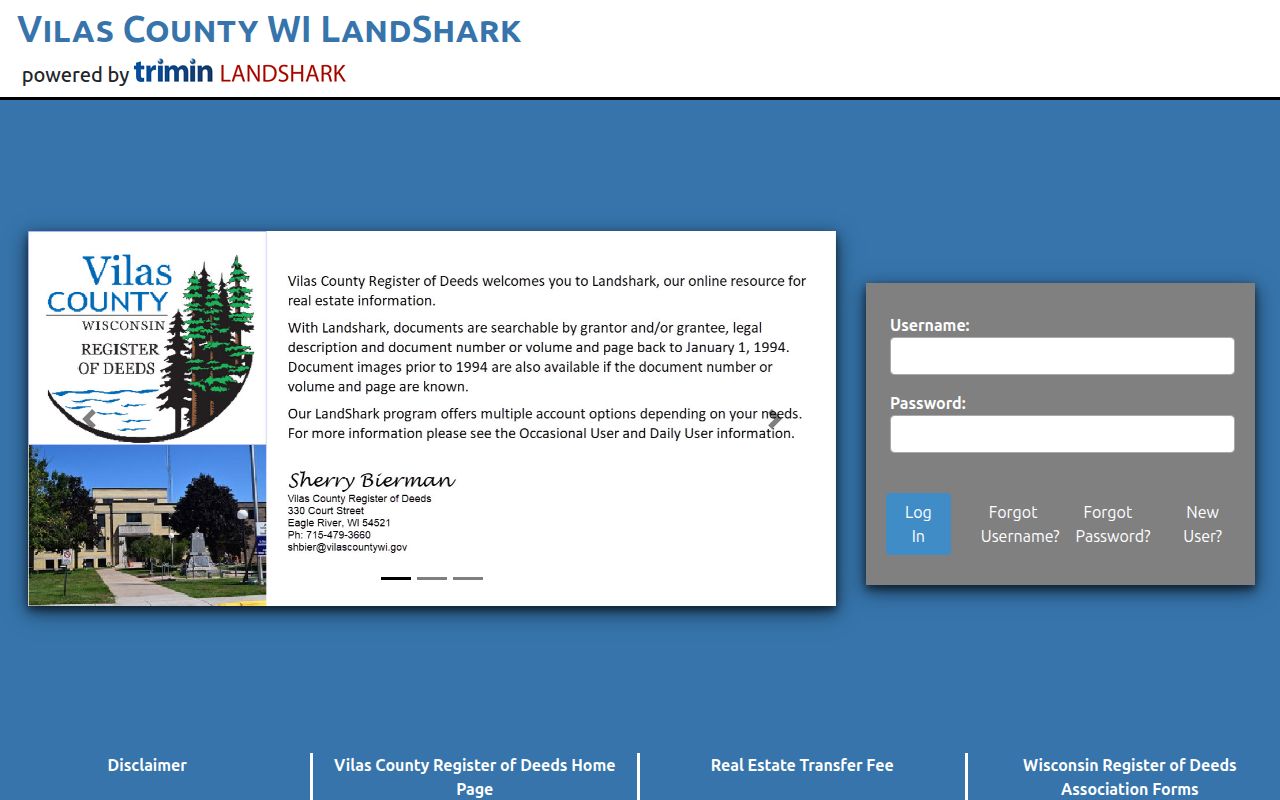
Cite the exact instrument reference in any office request.
Vilas County Deed Index Timing
The Register of Deeds disclaimer sets a practical timing rule. Party and tract indexes normally appear on the next working day. Images follow by noon that day. Workload and equipment can shift the schedule. A sale that just closed may sit outside a same-day index even after signing. The tax-roll owner may still carry the prior name.
When timing matters, compare the closing date, the recording date and the index posting date. If nothing appears, check again after the normal window. Then call the Register of Deeds with the parcel key and parties. A missing online hit does not prove a deed was rejected or never recorded.
The county's LandShark index disclaimer also warns that online search is subject to equipment limits. Volume limits apply as well.
Vilas County Older Deed Images
Not every image online is equally readable. Older ink can fade, and pre-1997 documents carried no legibility requirement. Blue or light ink scans especially poorly. Compare the index text against the original image. Check for attached pages, and skip guesswork when a name or acreage stays uncertain.
When an image defeats you, ask the office about a counter copy. You can also ask about the original book. The earliest LandShark coverage year is not stated publicly. So anyone tracing a long chain should confirm the online cutoff and request older deed books or microfilm as needed.
For a past-owner chain, the backward search method is described on the Vilas County prior-owner page.
Vilas County Plats and Deeds
A plat lays out a subdivision. A certified survey fixes the boundaries of one tract. Legal descriptions in Vilas County can take several forms. You might see a platted lot or a government lot. It could be a section-town-range call, an acreage figure, a lake name, or a survey reference. Tax bills usually shorten the description. That shortcut can hide the controlling language. Pull the full text in LandShark, check its lot or section call against the county map, and then open the recorded plat or survey itself.
Older Eagle River plats include the Original Plat and Lake Park Addition. These tie historic lot-and-block names to modern parcels. The 2025-2027 Land Information Plan covers GIS parcel joins and survey links. Still, a polygon on a GIS map is not a deed exhibit. Keep the parcel key and instrument reference together in your notes. If an exhibit seems missing from an online image, ask the Register of Deeds.
Vilas County Court and Deed Records
One foreclosure can scatter its paper trail across several systems. A lis pendens, a court judgment, a case file, and the eventual deed each sit with a different custodian. Search Wisconsin Circuit Court Access for parties and case summaries. Turn to LandShark for recorded instruments. The Circuit Court Clerk handles case-file questions. Court summaries can omit documents or restrict certain case types.
The Sheriff's office handles civil process and posts sheriff-sale notices. Sales are listed for Thursdays at 2 p.m., but dates and fees shift. Confirm the active notice on the Vilas County Sheriff page. A case summary alone never proves title passed. Find the later recorded instrument and match its legal description. For activity alerts that can support a deed search, the official Vilas County Land Notification page lists current service details.
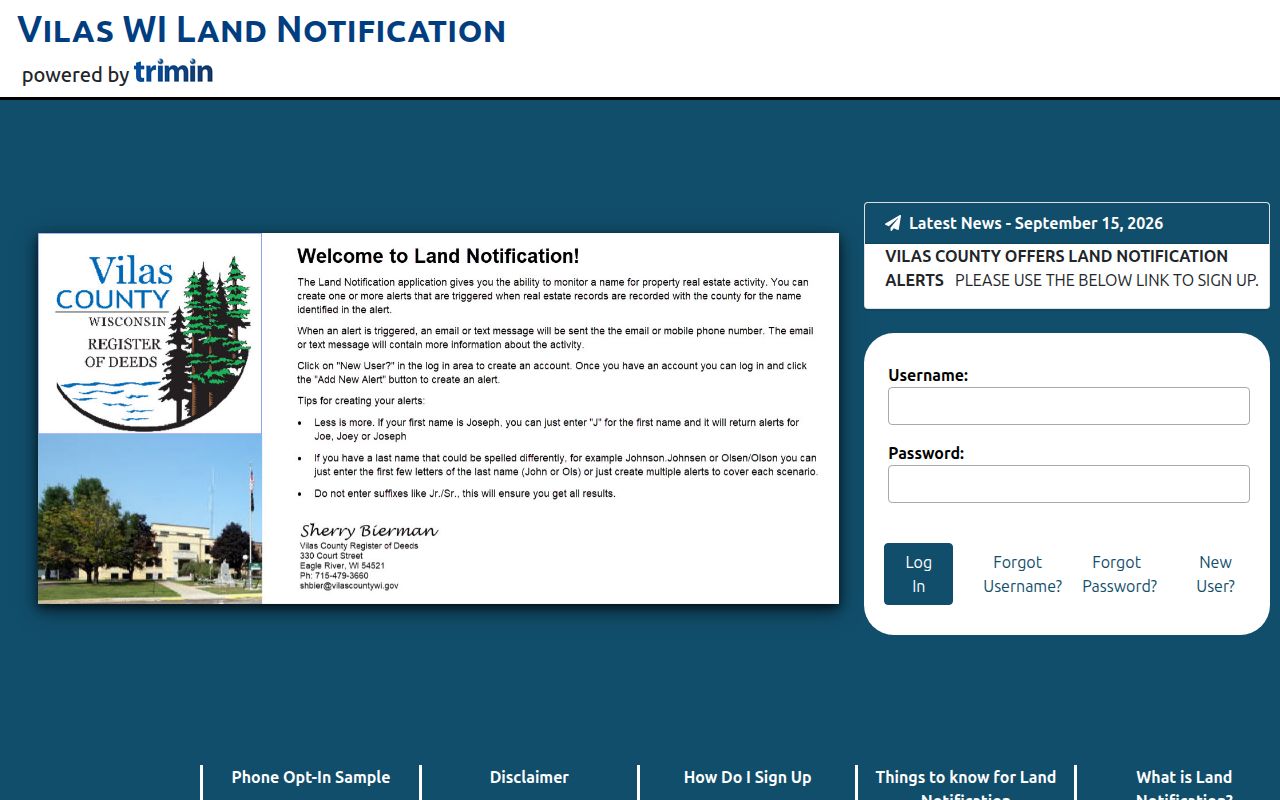
A filing that looks off should not sit unchallenged. Keep the LandShark reference handy, then report the document to the Register of Deeds and to law enforcement.
Vilas County Sale Deeds
A sheriff's sale layers several dates onto one property timeline: the court proceeding, the advertised auction, any confirmation or later order, and the deed finally recorded for the parcel. These milestones live in different systems. The sheriff's notice carries the auction details, WCCA can point to the case, and LandShark shows the instruments that were actually recorded. Compare names and legal descriptions across sources. A notice alone does not change the tax-roll owner. That distinction matters.
The Sheriff lists sales for Thursdays at 2 p.m. and a $150 sale-service fee for process work. The active notice controls current details. The Sheriff's civil-process page is the countywide starting point for checking notices. For a later deed, search the recorded index. Contact the Register of Deeds if the online image is missing or unclear.
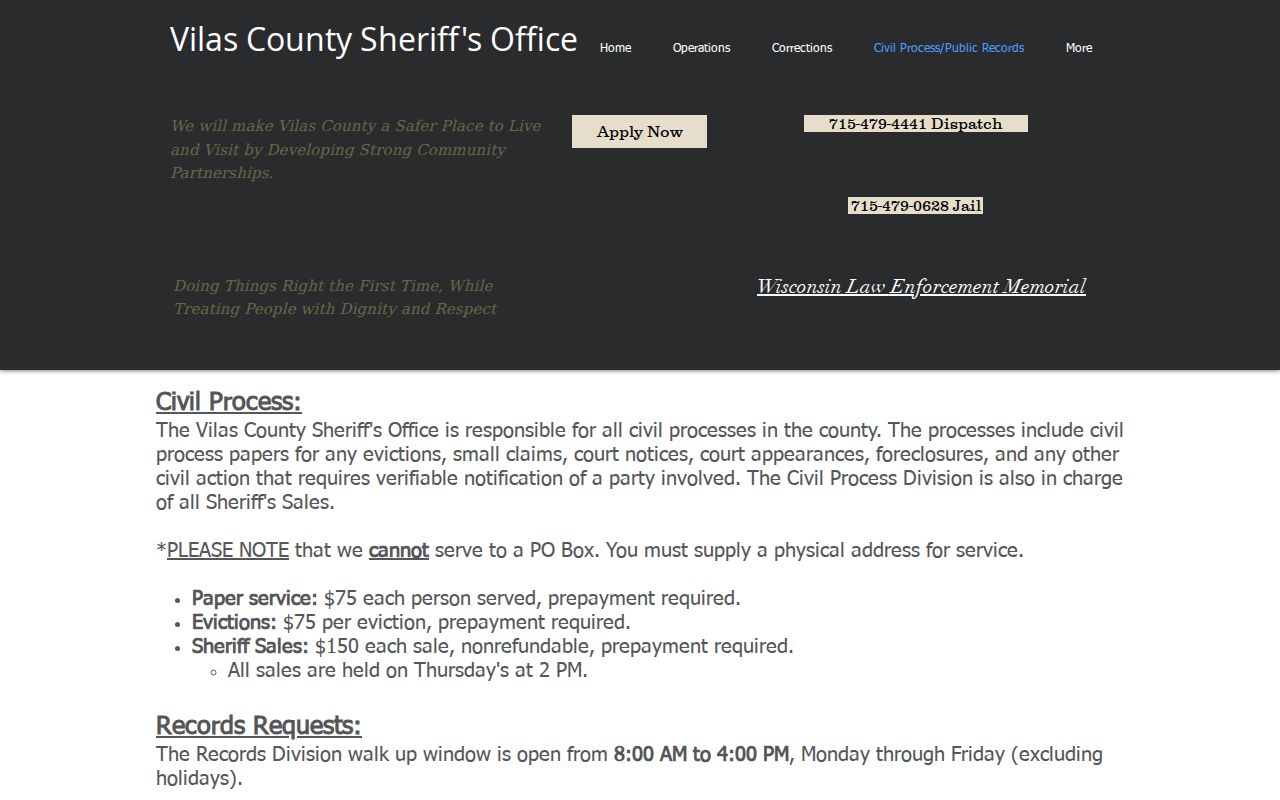
Keep auction, case, and recording references separate. That discipline makes a deed chain far easier to verify.
Not every recorded instrument transfers ownership. A mortgage records a secured debt. A release may show an earlier lien discharged. A plat lays out lots without naming any buyer. Read the instrument type and its parties before adding an event to a title timeline. For a deed, check every page and exhibit. Look for exceptions, retained interests, or a corrected description. Cite the recording reference when asking the Register of Deeds for clarification.